
Design of refrigeration automation systems is one of the most important and promising directions in the development of such equipment, ensuring efficiency, reliability, and ease of use.
Industrial systems are indispensable in many industries and sectors of the economy, such as food, pharmaceuticals, floriculture, and others. Unfortunately, similarly to the use of other necessary technologies, the correct and safe functioning of these systems depends on continuous monitoring of conditions, proper exploitation, and regular technical service. Improper use and maintenance of refrigeration equipment can lead to increased risk of accidents, breakdowns, reduced efficiency, and equipment downtime.
The most common problems in industrial refrigeration are:
– Insufficient cold production.
– Overheating of the refrigeration compressor, which can lead to a violation of the temperature regime, spoilage of goods, failures in the operation of the enterprise, and cause more serious equipment breakdowns.
– Compressor malfunction.
– Freezing of the evaporator.
To prevent these problems, it is necessary to carry out inspection and testing of the electronics, control of the coolant level, and tightness of the system. It is necessary to continuously monitor the condition of the equipment and adjust the system according to certain operating conditions. Automated automation in refrigeration system solutions are excellent at all tasks related to maintaining the necessary operating modes, controlling the parameters of operation, and preventing the failure of industrial refrigeration equipment.
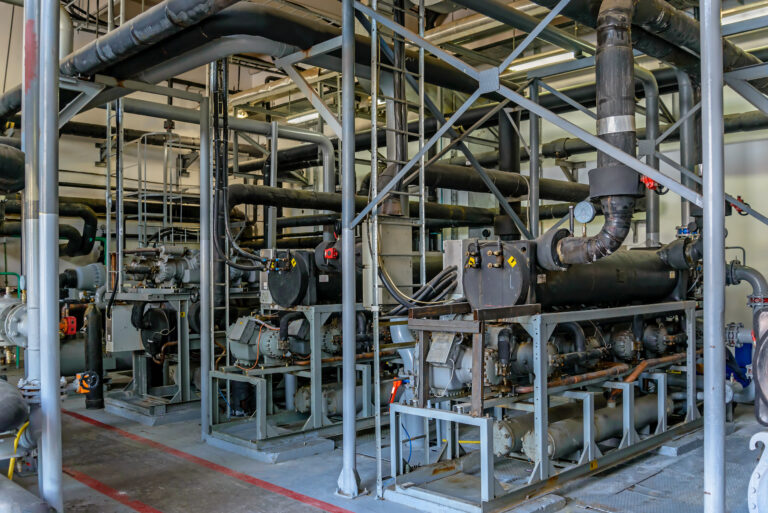
The introduction of industrial refrigeration control systems not only extends the service life of refrigeration units but also allows for a significant reduction of their maintenance costs, ensures the safety of use, and guarantees non-stop operation.
Main advantages of the introduction of automated control systems for refrigeration units:
– Maintenance of the set temperature, humidity, air flow, and other operating parameters.
– Use of sensors. The system is equipped with various sensors for monitoring temperature, pressure, humidity, and even energy consumption. These sensors provide real-time data that helps optimize the performance of the system.
– Self-diagnosis, which makes it possible to detect faults on time and prevent the occurrence of serious breakdowns and equipment downtime.
– Warning and emergency alarms that alert service personnel when system parameters exceed operating limits and an emergency develops.
– Reducing the influence of the human factor, which lowers the risk of errors.
– Possibility to set different programs for the control of refrigeration units according to operational needs.
– Remote control, which provides the ability to continuously monitor and change equipment operating parameters from anywhere in the world.
– System integration. The ability to integrate the refrigeration equipment management system with the existing enterprise systems enables the management of all equipment from a single center. This helps increase the productivity and quality of the company’s work.
In many cases, enterprises also require special solutions such as ammonia refrigeration system monitoring, programming a plc program for compressor, or setting up a reliable refrigeration control panel for local and remote operation.
ASA-Projekt specialists have many years of experience in the development of automated control systems for industrial refrigeration equipment. We focus on developing individual control systems, using an innovative and creative approach to each task. Contact us, and we will be happy to discuss your project and offer the most effective solution to achieve your goal.